Considering Accelerated TMS? Start here.
The questions we hear most.
What is TMS?
Transcranial Magnetic Stimulation (TMS) is a non-invasive treatment for depression that uses gentle magnetic pulses to target areas of the brain involved in mood regulation. First introduced in 1985 and FDA-cleared for depression since 2008, TMS engages the brain's neuroplasticity — helping shift the entrenched neural patterns that sustain depression.
What is a one-day TMS protocol?
Several versions of accelerated TMS have been researched. One-day TMS is an application which involves compressing six weeks of treatment into one day. The protocol is grounded in theta-burst research and can be tailored to your treatment plan and comfort level.
Is Accelerated TMS right for you?
Common reasons patients turn to TMS
01
Medication has not worked, or isn’t a fit.
For adults and adolescents alike, side effect hesitations often make medication feel unsustainable. TMS offers another potential solution.
02
You want to treat the cause, not just the symptoms.
TMS engages neuroplasticity, network function, and connectivity at the level of the brain itself, helping shift the patterns that sustain depression.
03
Standard 6-week protocols don't suit your schedule.
Accelerated TMS condenses a full six-week course of treatment into one or two days, with minimal disruption to work, school, or family schedules.
FAQs
-
TMS has been researched and used clinically since the 1980’s and has a long record of data in various applications.
-
TMS is FDA-cleared, non-invasive, and well-tolerated. Most patients experience little to no discomfort and leave sessions without any impairment.
-
Several versions of accelerated TMS have been researched. One-day TMS is an application which involves compressing six weeks of treatment into one day. There is also flexibility in tailoring the treatment to your specific needs and comfort level. Our aim is to offer a flexible, effective, evidence backed, comfortable option to treat your symptoms
-
Across several studies of various accelerated TMS (specifically iTBS) protocols, response rates ranged up to 86.4% and remission rates up to 86.4%. Results with accelerated TMS are durable. At 4-week follow-up, response rates ranged up to 66.7% and remission rates up to 57.1% for depression. With any intervention these are not guaranteed outcomes, but indicate the robust possibility of response with accelerated TMS protocols.
-
TMS is generally well-tolerated. The most commonly reported side effects are temporary headaches, scalp discomfort, fatigue, and in some cases mild dizziness or nausea — most of which resolve shortly after a session. No long-term negative side effects have been reported. Seizures are the most serious potential risk, but are rare — occurring in approximately 7 per 100,000 sessions, and typically only in individuals with pre-existing risk factors. As with any treatment, we discuss your individual risk profile before beginning.
-
No. While TMS is most widely known and FDA-cleared for the treatment of depression, it is also FDA-cleared for OCD, anxious depression (depression accompanied by anxiety), and adolescent depression in patients 15 and older. A growing body of research supports its use for other conditions as well, including PTSD and certain forms of treatment-resistant anxiety, though these uses are considered off-label. Whether TMS is appropriate for your specific situation is something we can discuss during your consultation.
-
We have deep experience in adolescent psychiatry and work with younger patients. The specifics of what's appropriate for any individual — including age — are always determined by a thorough clinical evaluation.
-
TMS works directly on brain networks and connectivity rather than altering neurochemistry systemically. There are no systemic side effects, no daily pills, and no waiting months to know if it's working.
-
TMS may be right for you if medication has not worked or has not been effective, or has caused you unwanted side effects.
-
We practice accelerated TMS — a full course of treatment compressed into one or two days, rather than the standard six weeks. Each individual session lasts about three minutes, with 30-minute breaks between sessions, repeated throughout the day.
-
Treatment can take place at our office, it can be brought to a treatment facility, or be done in the comfort of your home.
-
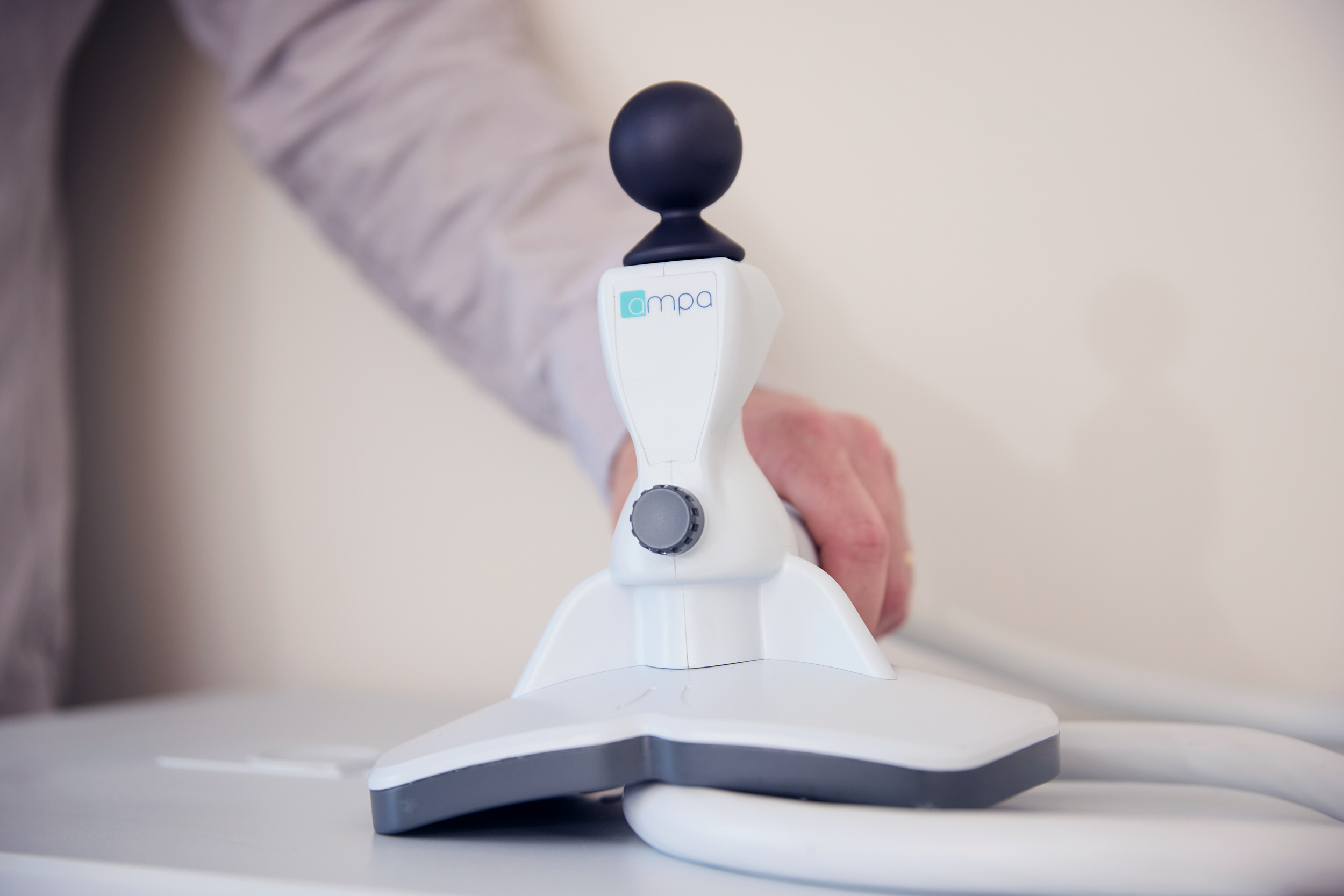
We use the Ampa One system, an FDA-cleared TMS device built specifically for accelerated, portable treatment. It's designed by neuroscientists — co-founded by Dr. Don Vaughn (PhD in Neuroscience from UCLA, with a research background at Stanford) and Dr. Jonathan Downar, a leading TMS researcher and clinician — and rests on four decades of TMS science going back to the technology's introduction at the University of Sheffield in 1985.
The Ampa One was cleared by the FDA in 2025 for the treatment of Major Depressive Disorder in adults who haven't responded adequately to prior antidepressant medication. Unlike traditional TMS equipment, which requires a dedicated clinic room and patients traveling for daily sessions over six weeks, the Ampa One has been leading the field in finding creative solutions to condensing treatments so that accelerated treatments are possible, safe, and effective. It is portable and lightweight — making the accelerated, in-home or in-office protocols we offer possible.
-
Please call or email for current pricing. We'll walk you through what's involved based on the treatment plan that's right for you, and we offer financing options to make payment plans clear and manageable.
-
This practice is not affiliated with insurance panels. We're happy to provide documentation that may support out-of-network reimbursement depending on your plan.
-
We ask that appointments be cancelled at least 24 hours in advance. Missed appointments and late cancellations are billed at the full session rate.
“I’m starting to feel a very subtle but powerful shift that includes not just mood but productivity, clarity of thought, and overall increase in capacity”
Matthew (accelerated TMS patient)